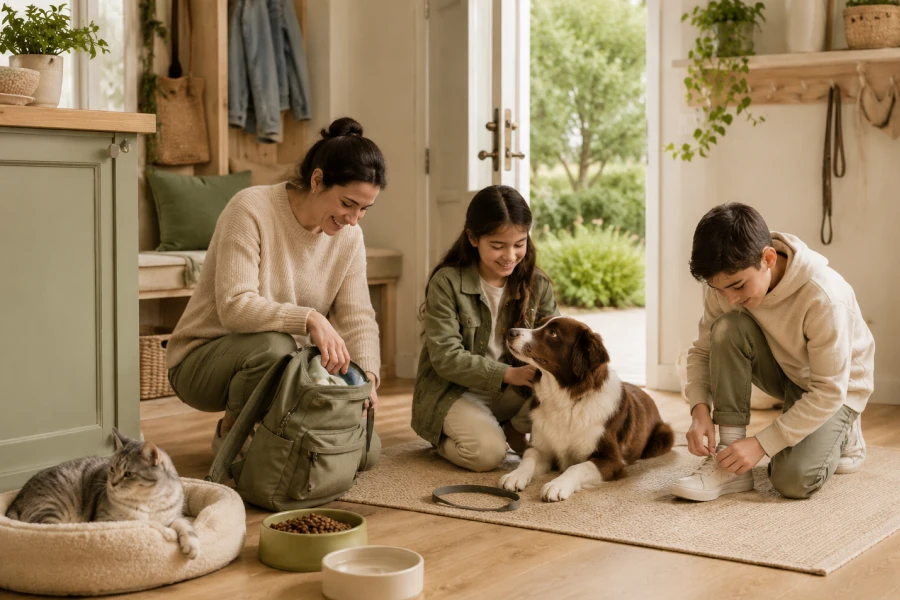
Pet friendly family routine planning helps a household feel peaceful when animals and people share busy days. Pets thrive when they understand what usually happens next. Families benefit from that same predictability. Feeding, play, walks, rest, grooming, and quiet time all become easier with structure. The routine does not need to feel strict. It should feel supportive. A flexible everyday pet care system can reduce stress for adults, children, and pets alike. When everyone knows the rhythm, the home becomes calmer. Care feels less reactive and more connected.
Predictable anchors are simple moments that repeat daily. Breakfast, school departure, work return, dinner, and bedtime can become care points. A dog may walk after breakfast. A cat may play before dinner. A pet may rest in a quiet room during homework time. These anchors help animals anticipate activity and rest. They also help families remember care tasks. Owners should avoid building routines that depend on perfect days. Life changes too often. The best anchors survive busy mornings and tired evenings. A steady rhythm gives pets confidence without demanding unrealistic control from people.
Families often juggle school, work, errands, sports, and social plans. Pets can feel unsettled when schedules change constantly. Planning ahead helps. Owners can identify the non-negotiables first. Food, water, bathroom needs, medication, safety, and exercise come before extras. Then enrichment and bonding can fit around those essentials. A useful family pet lifestyle plan makes priorities visible. This prevents last-minute confusion. It also helps children understand that pet care is part of household life, not an optional activity.
Stress often grows when pets do not know what to expect. A hungry pet may beg. An underexercised dog may bark. A bored cat may scratch or demand attention. These behaviors can frustrate families. Routine helps by meeting needs before tension builds. Morning activity can reduce daytime restlessness. Evening calm time can support better sleep. Regular feeding can limit anxious waiting. The whole home feels different when care happens proactively. Pets become easier to understand. People become less reactive. This does not remove every challenge, but it creates a calmer foundation for solving them.
Children can participate in pet care when tasks fit their age and maturity. Young children may help choose a toy. Older children may brush, play, or prepare supplies with supervision. Teens may manage walks or training practice. Adults should still hold final responsibility. Clear instructions matter. Children need to learn gentle handling, safe boundaries, and respect for rest. A practical pet care for families approach turns responsibility into connection. It teaches empathy while protecting the animal’s comfort. Shared care can become a meaningful family ritual.
Evenings can be the most difficult part of the day. Everyone returns home with different energy. Pets may be excited, hungry, or overstimulated. A routine can smooth that transition. Start with the pet’s most urgent need. For a dog, that may be a bathroom break. For a cat, it may be play or dinner. After that, build in calm time. Soft lighting, quiet voices, and predictable spaces can help. Avoid saving all pet activity for bedtime. That can create restlessness. A better evening rhythm releases energy earlier, then guides the home toward rest.
No family routine stays perfect forever. Holidays, travel, illness, school changes, and work shifts can disrupt plans. The solution is not rigid control. It is flexible consistency. Keep the core needs stable whenever possible. Adjust the timing when life requires it. Prepare backup plans for feeding, walks, and care. Review the routine as the pet ages. Puppies, kittens, adults, and seniors need different support. A calm routine grows with the household. It protects connection even during busy seasons. Pets feel safer when families adapt with awareness instead of waiting for problems to appear.



Leave a comment